
Imbolc and breaking through
The Festival of Brigid

In my course ‘Once Around the Sun’, we used the cycle of the seasons, of the Sun around the earth each day and over the year, and the circle as a symbol of our lives. The use of the circle is a profound and powerful symbol within shamanic cultures around the world, and within my own Druidry. And in astrology, the Tropical Zodiac, the cycle of the year, gives us clues to the meaning of each sign.
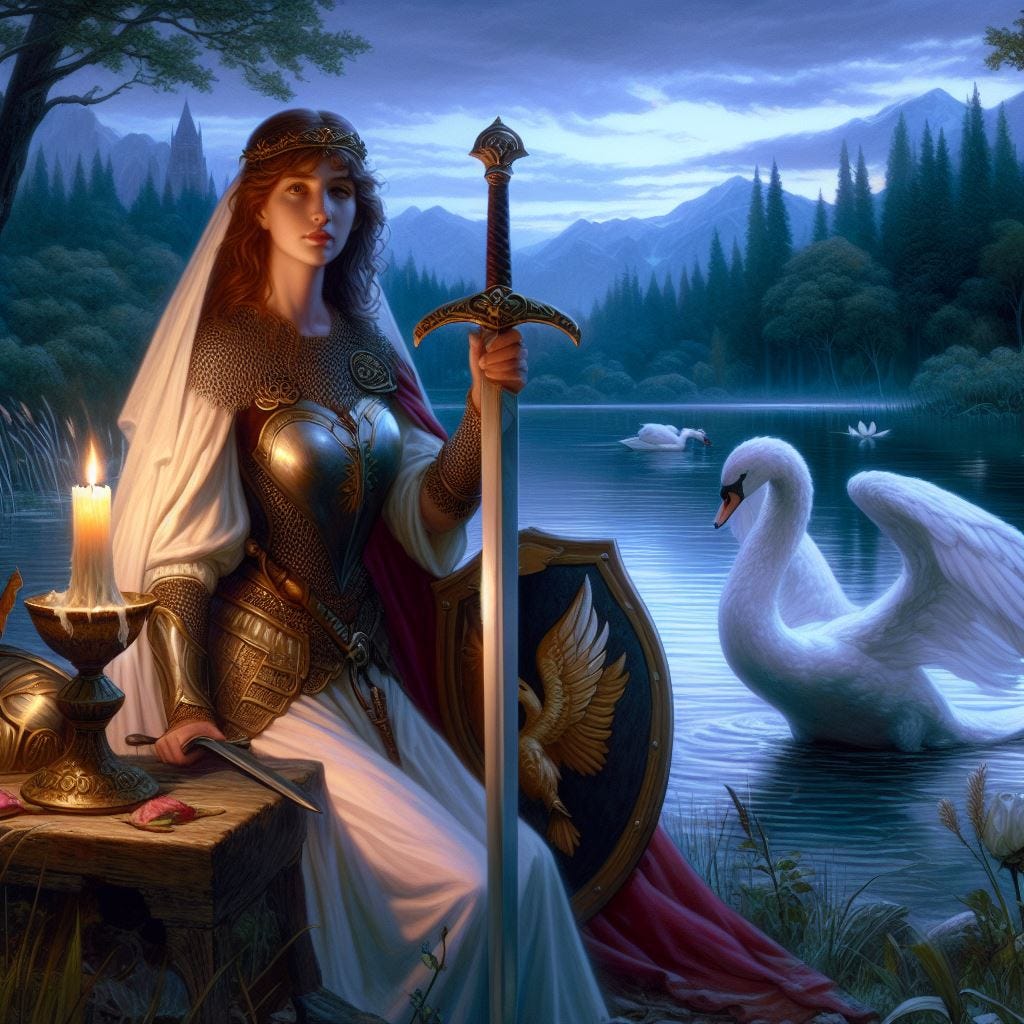
It’s early spring. The days, while still shorter than the nights, are now noticeably lengthening as we strive towards longer days. We look to the skies. The landscape and air is still heavy with cold and dark, but the first glimpses of new life are beginning to show. If we have the strength and courage, we may find a way to break free of the restrictions of an earthbound Saturn and force our way into the chill invigorating air. This is the message of the first Celtic festival of the year - the festival of Imbolc, or Gwyl Fair in the Brythonic tradition.
We call to the divine forces of spring, the first of whom are now quietly but surely beginning to move through the landscape. To break through the frozen constraints of winter’s cold; we find our first movement after the long cold nights of winter, stretching and waking. We dance its emergence, yet in doing so with a wakeful awareness of our own truth emerging. It’s now time to break through the frozen topsoil of our own fears and inhibitions.
Imbolc, derived it is said from ‘ewe’s milk’ as we are at the peak of the lambing season, is a dedication to the Goddess - or the Saint, depending on our personal path - Brigid. In Ireland today the festival is known as Lá Fhéile Bride, Brigid’s Feast Day and is traditionally celebrated on either the 1st or 2nd February. She is known by many derivative names all across the Islands of Britain and Ireland as well as across mainland Europe, leading many to believe she is the memory of a pan-European springtime goddess. In modern practice her festival is celebrated by the lighting of candles, traditionally nineteen in number.
In Irish mythology, she was the daughter of the god Dagda, the god of fertility, and one of the Tuatha de Danann. She married Bres mac Elatha, one of the kings of the mythological cycle who had a Fomorian father and a mother from the Tuatha de. He was known for favouring the Fomorians, for his pettiness with his people and visitors. Brigid had a son with Bres, named Ruadan. Some modern authors suggest that she was a triple goddess or that there were three sisters with the same name who ruled the areas with which the goddess is related: poetry, blacksmithing and healing.
Despite her great importance, Brigid appears little in the mythological sagas. Brigid features in the first story, “Cath Magh Tuireadh” (The First Battle of Moytura) which tells the arrival of the Tuatha de Danann to Ireland where they defeated the Fir Bolg. In this story, she is described as the woman of poetry, worshiped by the poets, the woman of healing, of metalwork and the one who made the first flute. As for her physical appearance, one side of her face was ugly and the other pleasant. Her name, according to the text, originates from the word breo-saighit, a spear of fire. In the following stories, only minor mentions are made about her. In “The second battle of Magh Tuireadh”, Brigid loses her son Ruadan, sent to spy on the Fomorians and was killed by Goibniu. Brigid mourned the death of her son by howling with grief, and thus gave birth to the art of women keening at funerals. Brigid is quoted as standing for the men of the province of Leinster against the others in Ireland. And that’s all we know of her. The rest is personal gnosis, or conflation with later writings about the Christian saint.
As a saint, Kissane (2017) claims that Brigid is one of the most important women in Irish history. She is the patron saint of the country and lends her name to about 115 sacred wells and 125 churches, both Roman Catholic and Church of Ireland. Despite her fame and importance, the author explains that St. Brigid is a dubious figure. There are no records contemporary to her existence, the most recent one dates to more than a century after her supposed death. According to Kissane, there are seven medieval books that tell Brigid’s life, but there is not much biographical data in them, as they belong to the genre of hagiography, whose aim is to strengthen community devotion in a saint and to promote their reputation, but not to give an account of the life and events that actually happened. Finally, Kissane presents us with three approaches scholars have on Brigiid:
that she did not exist other than in myths and hagiography
that she is the Christian embodiment of a Celtic goddess
that she is a historical character that did actually exist
The hypothesis taken as most accepted is that the saint existed, but that many of the characteristics and deeds attributed to her were originated in the belief in the pagan goddess, making her story difficult to unravel.
In Alexei Kondratiev’s classic book ‘Celtic Rituals’, Imbolc is described as the festival of the first day of spring, and so is celebrated accordingly. To our modern minds this may seem an odd association, but if we remember that for the Celts everything has its beginnings in darkness (the ‘new year’ beginning at Samhain, the new day beginning at dusk) we can begin to recognise how this time of year can be considered the beginning of spring. Even though it is cold and wet, with snow possibly still on the ground, the strength of winter is waning and the promise of warmer days is tangible.
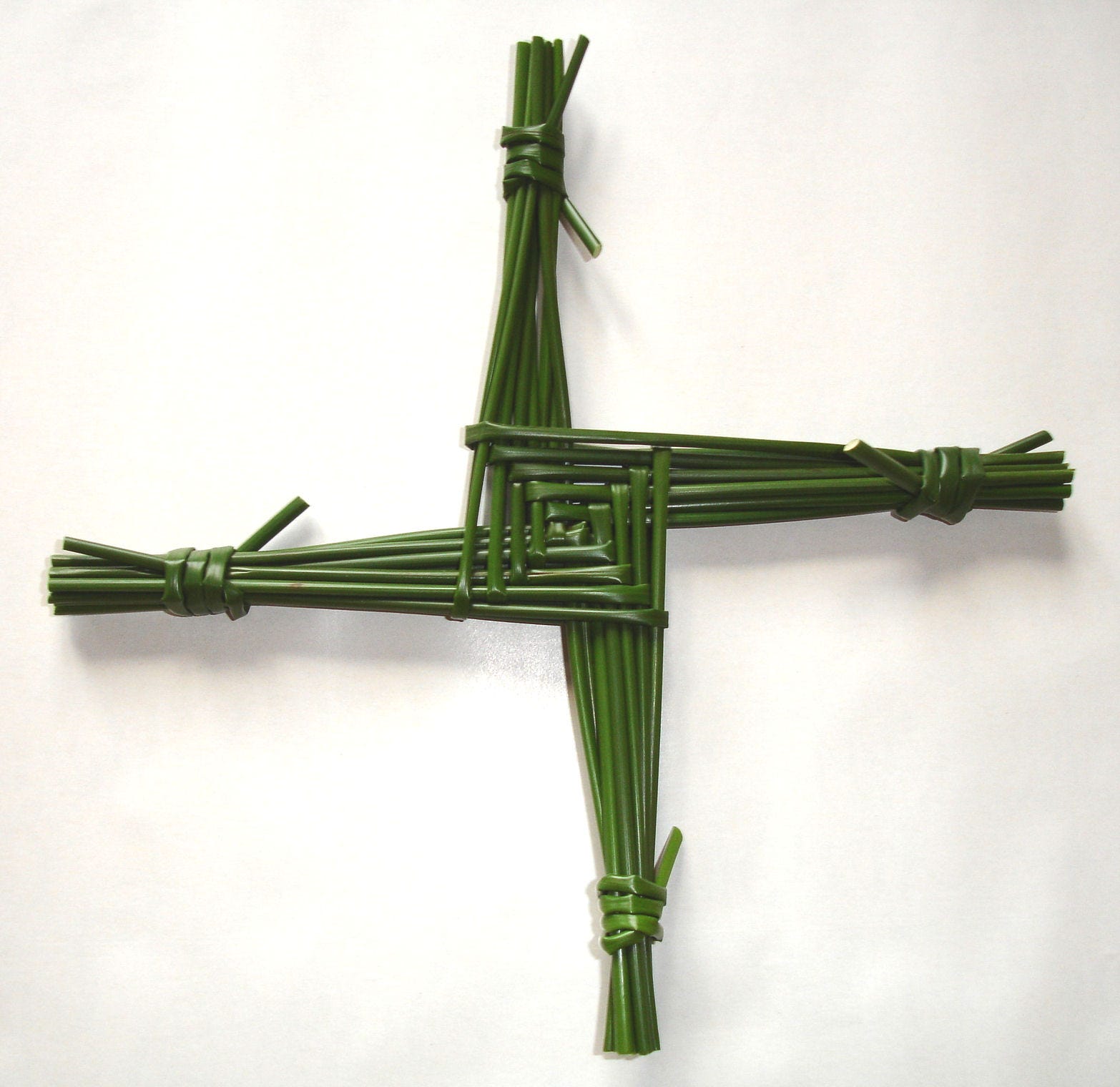
Imbolc, then, is a festival of transition from darkness to light, and we beckon the light in with the lighting of those candles. We celebrate the transition and the slow reawakening of the land, the hope of increased warmth and the washing away of the elements that impede growth. We make prayers of release from that which may still hold us back and now begin to actively nurture the quiet flame of new shoots on the seeds that we have tended through the dark times of winter. We make prayers for the protection and prosperity of home and hearth, the strengthening fire that may forge anew the strength and courage to birth our dreams, and express our creativity through offerings of a Brigid’s Cross - cros Bride - or a brideóg as a representation of the goddess herself, and with offerings of creativity and poetry. She remains to this day a goddess of protection for the home and for those giving birth.
To those of you who honour and work with Brigid or the Christian Saint, to those of you who work with the ancient festivals and modern Candlemass, make your ritual and celebrations be blessed.
With all love,
Christine x
Needless to say, I LOVE THIS.
Thank you for this beautiful article! I must remember to invoke Brigit to get my creative juices flowing. It's also interesting that one side/aspect of her is said to be not so pretty. It gives women licence just to be who they are without having to live up to an ideal like the Virgin Mary.